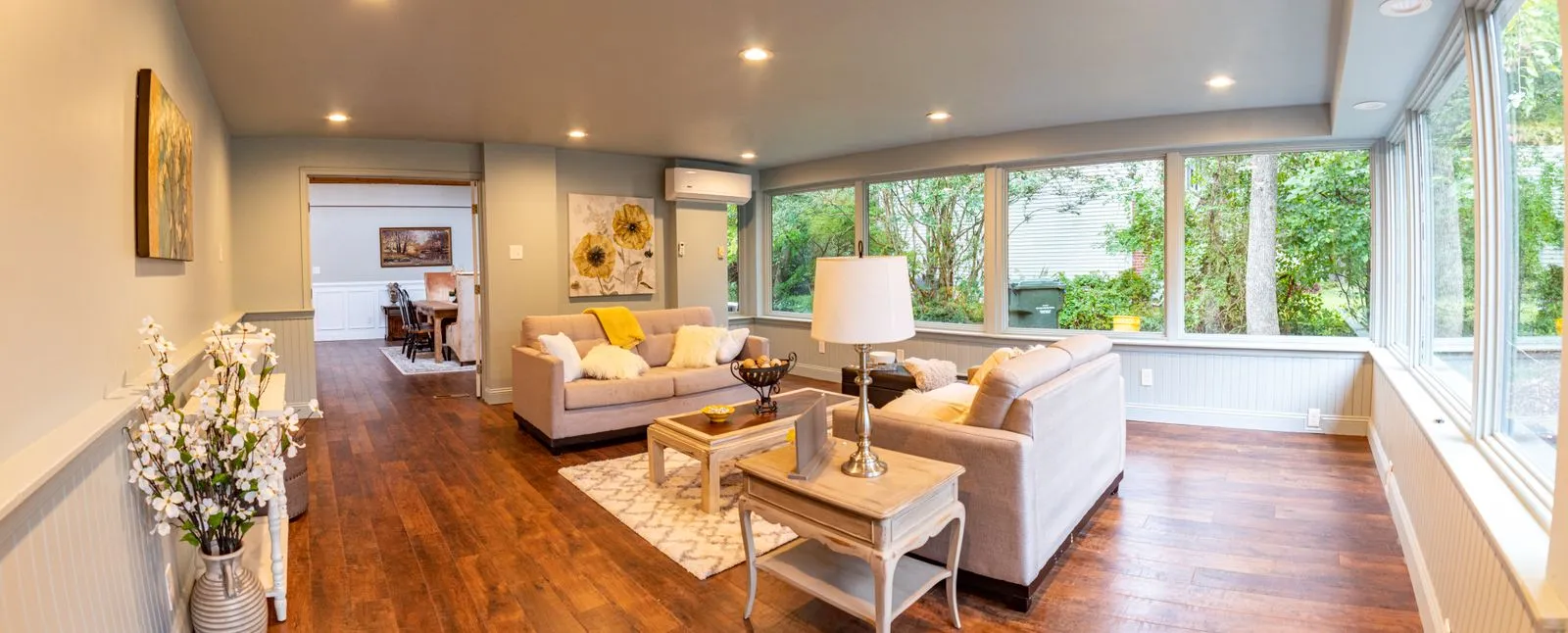
A good living room layout makes everyday activities easier, from relaxing and reading to talking with guests or watching a show. Start by considering how you use the room, then arrange furniture to support those routines without blocking movement. You do not need a large space or a matching furniture set. With a few measurements and deliberate choices about seating, circulation, lighting, and storage, you can create a room that feels comfortable and functions well.
Map the Room and Its Uses
Measure the room’s length and width, then note doors, windows, radiators, outlets, and built-in features. Mark these on a simple sketch, along with the routes people use to enter and cross the room. This helps you spot obstacles before moving heavy furniture. If possible, use painter’s tape on the floor to outline the footprint of larger pieces and check how much space remains around them.
List the activities the room needs to support. A household that reads or chats may need several comfortable seats and task lighting, while a room used for movie nights may need a clear view of the screen. If the living room also serves as a play area or workspace, decide where those activities will happen and what needs to be stored nearby.
Arrange Seating for Conversation
Choose a focal point that suits how you use the room, such as a fireplace, a large window, or a television. Place the main seat so it faces or relates to that feature, then add other seats to form a welcoming group. Seating does not have to line the walls. Pulling pieces inward can make conversation easier and define the living area in an open-plan space.
Keep seats close enough for people to talk comfortably, and leave a useful surface within reach of each main seat. A coffee table should be easy to approach without forcing people to squeeze past one another. If a large table makes the arrangement feel cramped, consider smaller side tables or nesting tables that can move where they are needed.
Keep Paths Clear
Plan the main route between entrances and through the room before finalizing furniture positions. Keep that path direct, especially where people naturally walk to another room, a window, or a frequently used seat. Avoid placing a sofa corner or table in the middle of a doorway route. In tighter rooms, shifting furniture slightly or choosing pieces with a smaller footprint can make circulation feel much easier.
Check how doors, drawers, and reclining seats operate in everyday use. Make sure people can open a cabinet, reach a window, and get up from a chair without moving several pieces of furniture. Leave enough clearance to walk comfortably around seating and tables; when space is limited, prioritize the most-used route rather than trying to create equal access on every side.
Layer Light and Plan Storage
Use more than one light source so the room works at different times of day. Combine general light with a floor or table lamp near a reading seat, and add focused light where you need to work or complete a task. Place lamps where cords will not cross walkways. If the room has strong daylight, consider how glare affects screens and seating, then adjust furniture or window coverings accordingly.
Match storage to the items you use in the room. Closed cabinets can hide games, chargers, or children’s supplies, while baskets make frequently used items easy to put away. Keep everyday essentials near where they are used, but avoid filling every surface. A clear spot for remote controls, books, and drinks helps the room stay organized without making it feel overly formal.
A practical living room begins with the way you move and spend time in the space. Measure first, arrange seating around real activities, protect the main pathways, and give lighting and storage a clear purpose. Test the layout before committing to it, then adjust as your routines change. For help shaping a plan around your home, Dublin Room Studio can help you explore your options.